A Website That Actually Brings Inquiries: The Building Blocks That Matter
Looking good is not enough. This guide covers the concrete building blocks a website needs to consistently turn visitors into inquiries and contacts.
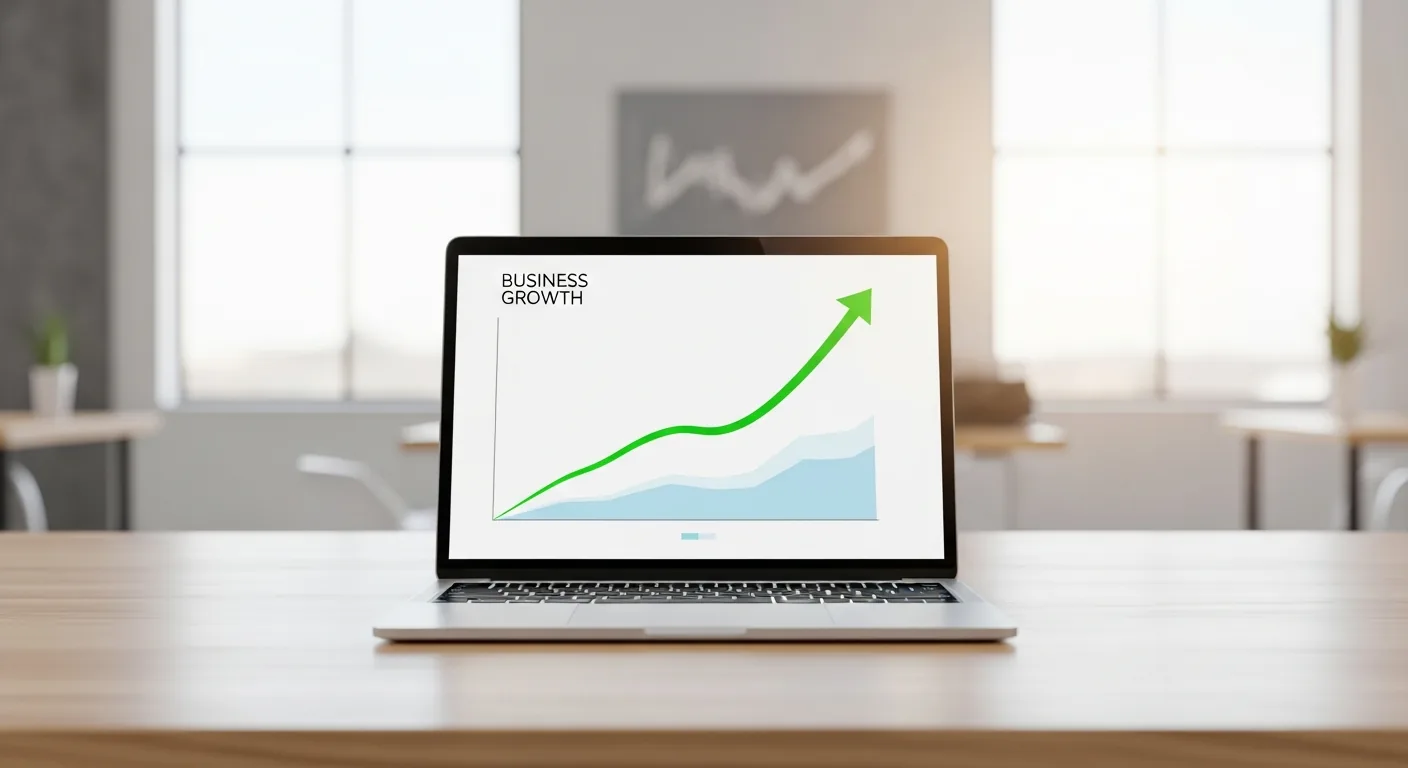
Many businesses have a website that brings them nothing. It looks fine, the content is broadly correct, and yet no inquiries come in. The problem is rarely a lack of visitors. It is usually a handful of specific, fixable failures.
Your offer must be clear within the first few seconds
When someone opens your website, they decide within seconds whether to stay. In that window, they need to understand: who is this, what do they offer, is this for me, and what should I do next?
These four questions need to be answered above the fold, without scrolling. Not with a line like "Welcome to our website," but with a concrete statement. Instead of "Your partner for digital solutions," try: "We build fast websites for tradespeople in the region so more inquiries come in through the contact form."
Specific wins. Generic loses.
The most important action must always be one tap away
On mobile, the difference between an inquiry and a bounce often comes down to friction. Most visitors arrive on a phone. If the contact option is buried three scrolls down, or the form is awkward to fill in on a small screen, you lose that person.
The call button or path to the contact form should be visible on every page without scrolling. Simple, direct, no detours. Someone who wants to get in touch should not need patience to do it.
Trust comes from specifics, not adjectives
"Reliable," "experienced," "professional." Every website says this. These words build no trust because they prove nothing.
What builds trust is concrete evidence:
- A real review with a name, location, and one sentence that shows what problem was solved
- A reference project with brief context: what was the task, what came out of it?
- A specific fact instead of a cliche: not "years of experience," but "active since 2011"
- A photo of the team or the person behind the business
A website full of general promises loses against any competitor who offers real proof.
Speed is not a bonus, it is a baseline
A slow website loses visitors before they have read a single thing. This is not speculation, it is a well-established pattern: the longer a page takes to load, the more people leave.
Slow pages come from oversized images, unnecessary code, and poor hosting. All three are solvable. A properly optimized page loads on mobile in under two seconds. This does not just feel better, it directly affects how many visitors stay and take action.
Content needs to be scannable
Nobody reads a website like a book. Visitors scan. They are looking for a signal that what they need is here. If that signal is not found quickly, they do not start reading.
In practice, that means:
- Short paragraphs, three to four sentences at most
- Real subheadings that describe what follows, not decorative ones
- No filler text, no empty opening sentences
- Important information first, not last
A page that is easy to scan gets read more often. A page that gets read more often brings more inquiries.
The contact path must be as simple as possible
The contact form is the final step. Someone who has reached it is already interested. No new obstacle should appear here.
A form with three fields (name, email, message) converts better than one with ten required fields. No forced phone number, no mandatory subject line, no unnecessary consent checkbox crowding the submit button. Once the form is sent, a brief confirmation should appear immediately.
The logic: someone who wants to inquire has already made the decision. They do not need to be slowed down again.
A website that brings inquiries is not a design project. It is a structured case for why someone should reach out now, and a clear invitation to do exactly that. Taking this structure seriously reveals quickly that beauty and function do not conflict. They reinforce each other.
Blog
Related articles
Ready?
Want us to deliver this for you?
Turn knowledge into results: tell us what you have in mind, we get back to you with an honest assessment.